

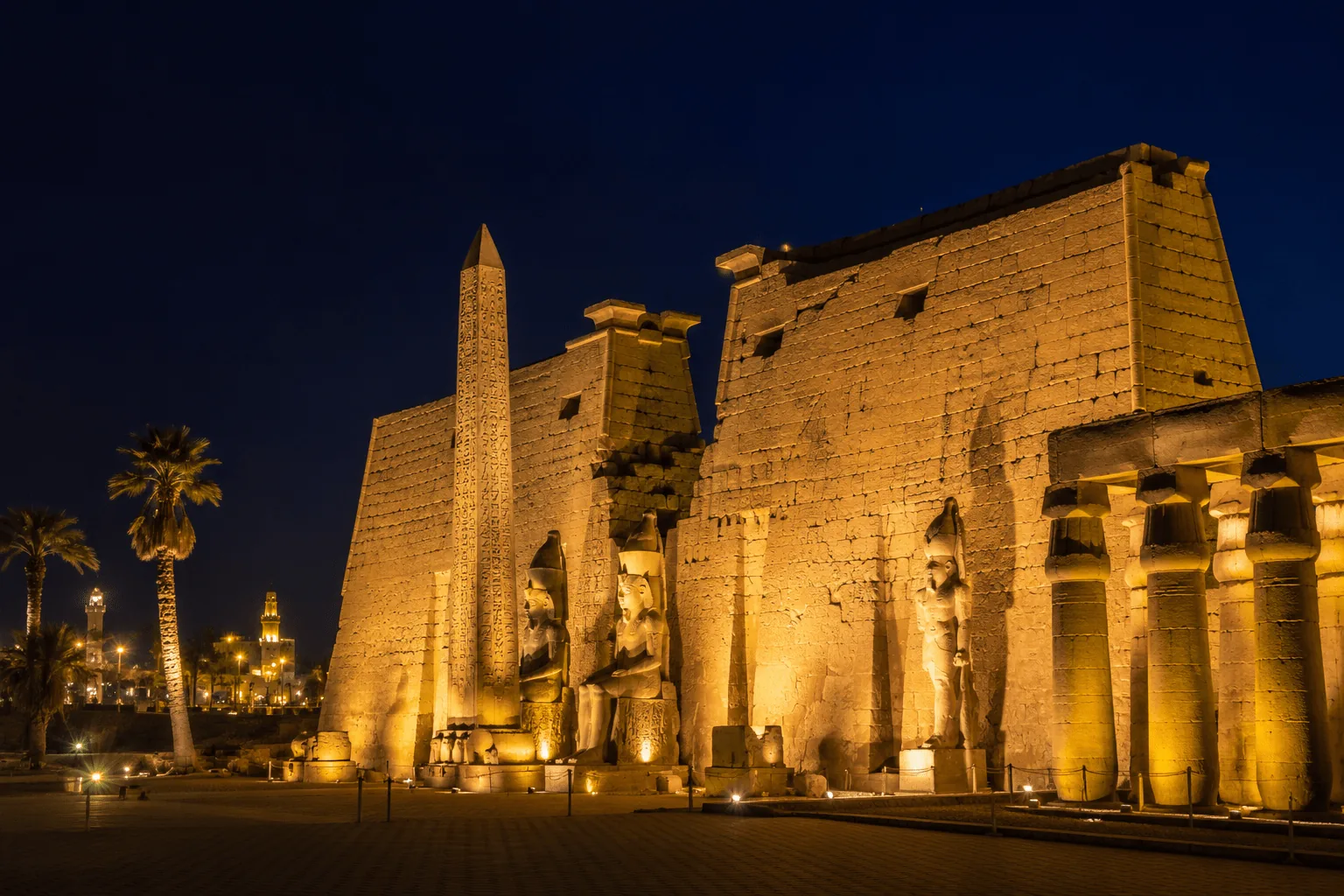
By day, Luxor Temple is impressive. After dark, it’s something else entirely. Floodlit against the night sky, with shadows carving deep relief into 3,400-year-old stone, Luxor Temple at night is one of those rare places where the lighting design genuinely changes what you see, not just how you see it.

Why the Light Changes Everything
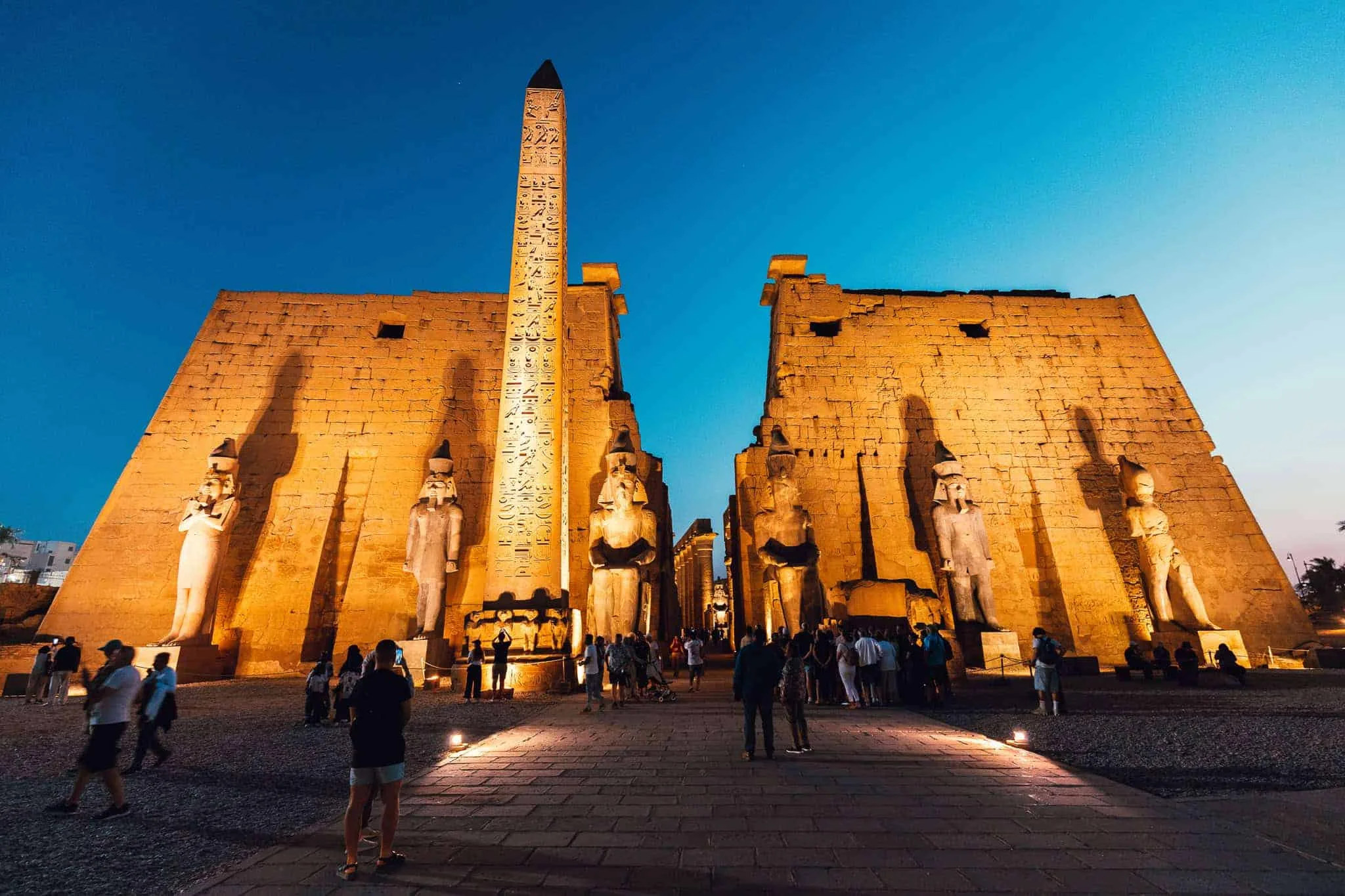
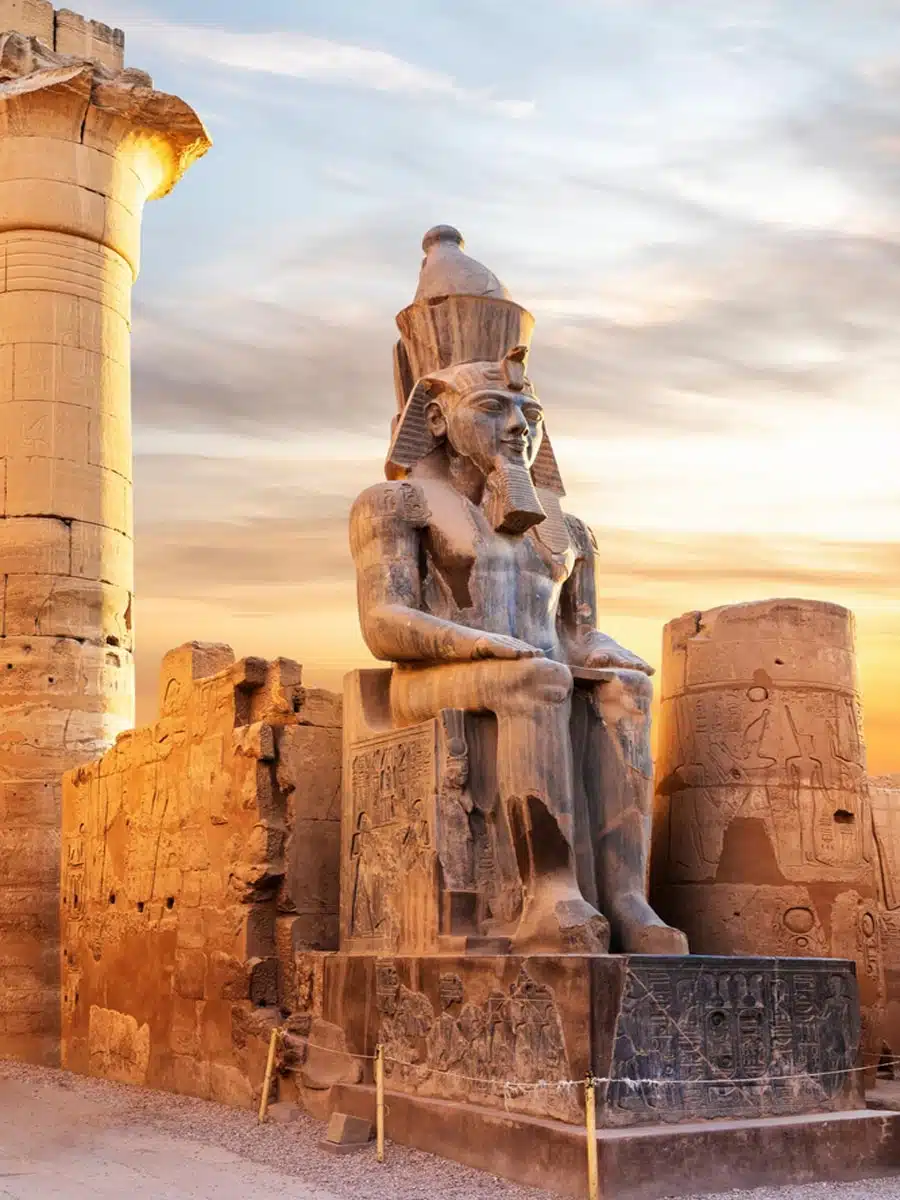
Harsh midday sun flattens carved reliefs, washing out the subtle depth that ancient sculptors worked to create. At night, warm floodlighting rakes across the stone at low angles, throwing every hieroglyph, every god’s profile, and every column’s fluting into sharp, almost three-dimensional relief. Details that are easy to miss in daylight — a procession of offering-bearers, a pharaoh’s crown, a line of inscription — suddenly stand out.
Walking the Avenue of Sphinxes
Luxor Temple connects to Karnak Temple via the recently restored Avenue of Sphinxes, a nearly three-kilometer processional route lined with sphinx statues. Seeing this avenue lit at night, largely free of the daytime heat and crowds, is one of the most atmospheric walks in Luxor.
The Great Court and Colonnade
Inside, the lighting design plays up Luxor Temple’s dramatic scale: the towering papyrus columns of the colonnade of Amenhotep III seem to rise endlessly into the dark sky, while the Great Court of Ramses II, ringed with statues and columns, takes on an almost theatrical quality after sunset.
Cooler, Calmer, and Quieter
Beyond the visuals, there’s a simple practical case for an evening visit: after the heat of an Upper Egypt afternoon fades, Luxor Temple becomes a genuinely pleasant place to linger. Crowds thin out as tour groups move on to dinner, leaving more room to slow down, read the inscriptions, and actually absorb the scale of the place rather than just photographing it.
Tips for Visiting at Night
- The temple typically stays open into the evening — check current hours locally, as they shift seasonally.
- Bring a camera that handles low light well; a small tripod (where permitted) makes a real difference for photos.
- Wear comfortable shoes — stone surfaces can be uneven, and the site is larger than it first appears.
- Pair it with an evening stroll along the Luxor Corniche, directly across from the temple’s riverside edge.
The Bottom Line
If you only have time to see Luxor Temple once, make it after dark. The lighting doesn’t just illuminate the temple — it reveals it in a way daylight simply can’t.
If you would like to experience everything described in this article in real life, we offer carefully designed private and small-group Egypt tours that cover this place. Our Egyptologist-led itineraries can be tailored around exactly what interests you most.


