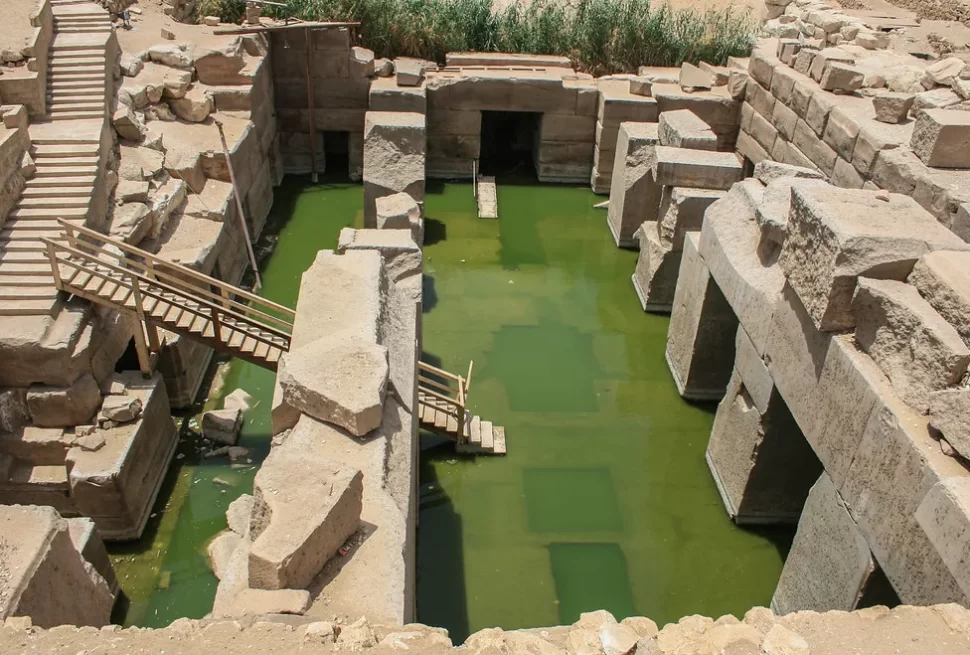

Behind the Temple of Seti I at Abydos, sunk well below the surrounding ground level, sits one of ancient Egypt’s strangest and most technically impressive structures: the Osireion. Built from some of the largest stone blocks ever quarried in Egypt, assembled with a precision that still puzzles engineers, it remains one of the country’s most debated monuments.
A Building Set Apart — Literally
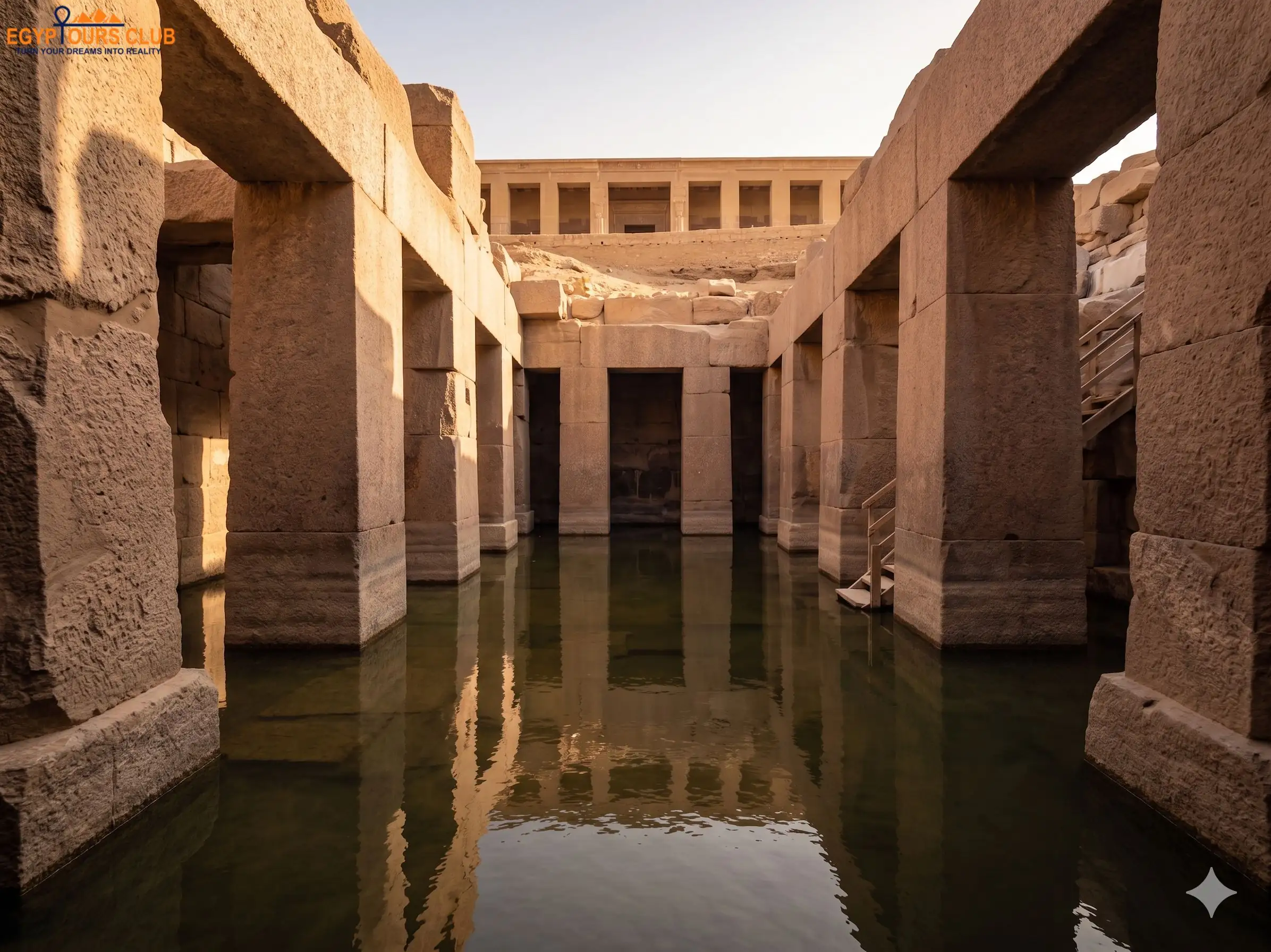
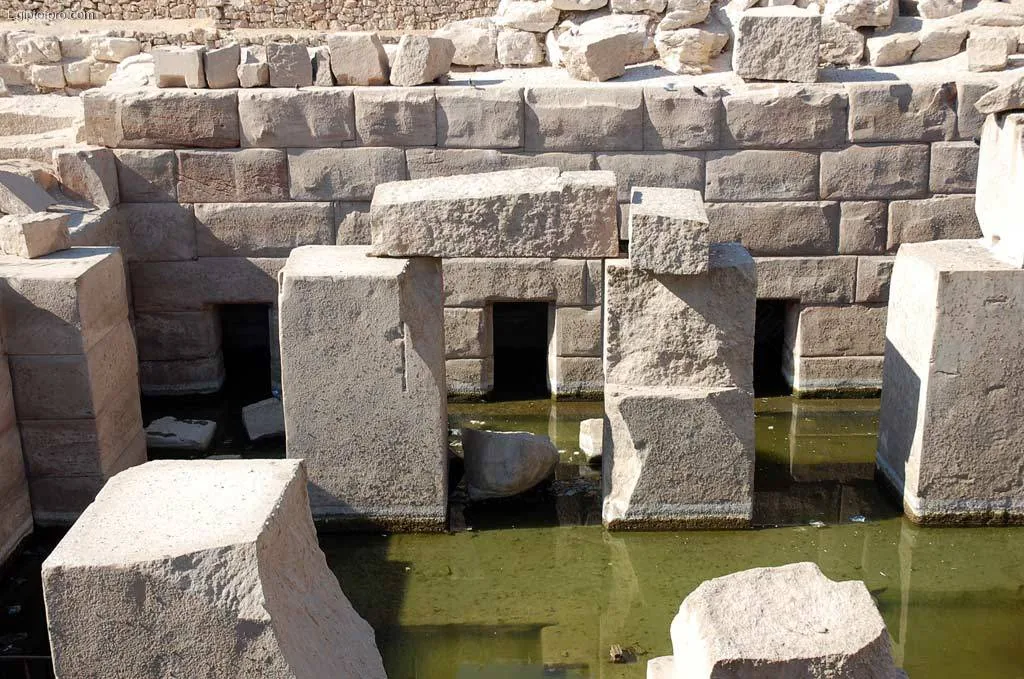
Unlike the temple above it, the Osireion was constructed below the natural water table, so that in antiquity a surrounding moat of groundwater would have reflected the structure, evoking the primeval mound rising from the waters of creation in Egyptian myth. Today the lowest chambers are often partly flooded, exactly as ancient builders intended.
Blocks on an Unusual Scale
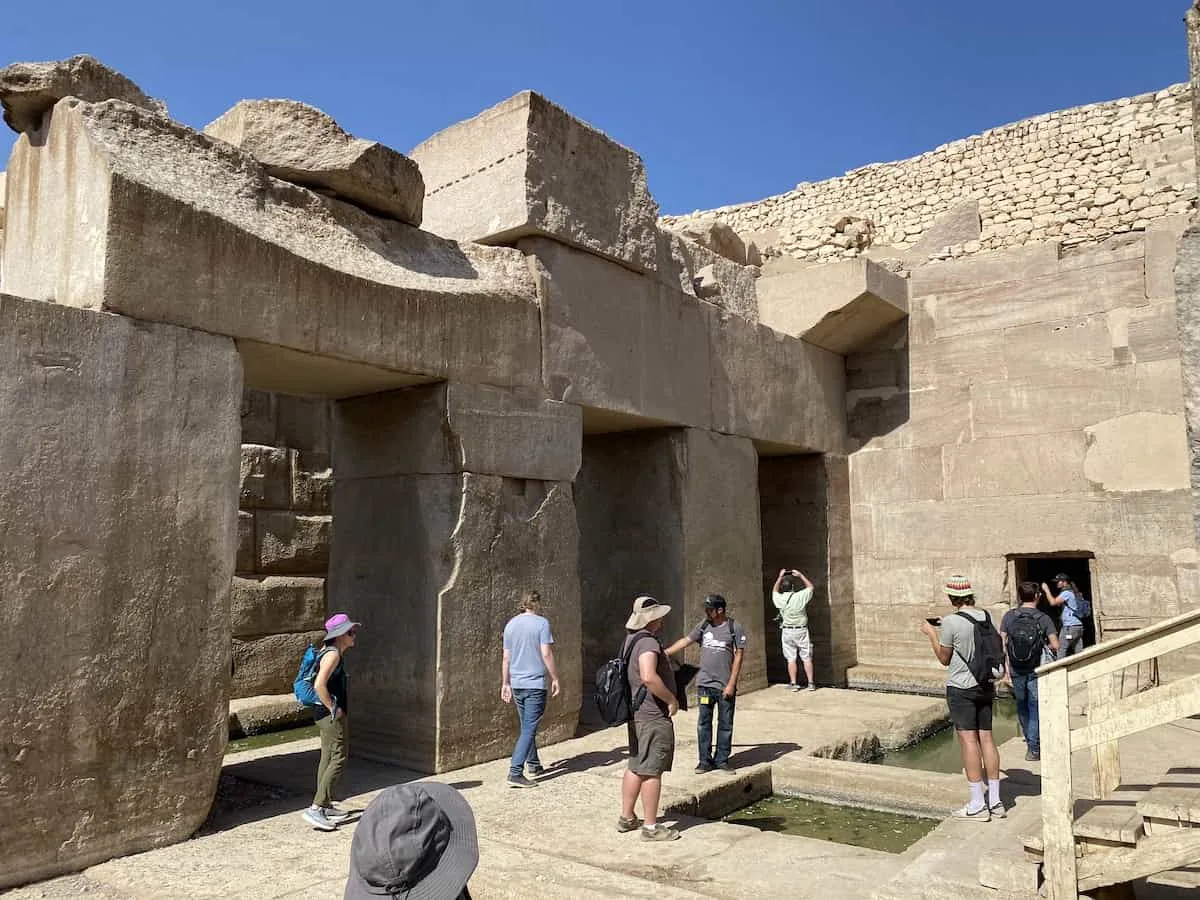
What sets the Osireion apart structurally is the sheer size of its building material. Its core is built from massive red granite and quartzite blocks — some among the largest used anywhere in Egyptian architecture — transported roughly 800 kilometers from quarries near Aswan. Moving stones of that scale without modern machinery required an extraordinary logistics operation: barges on the Nile during flood season, sledges, ramps, and almost certainly thousands of coordinated workers.
A Trabeated System Built for Permanence
Architecturally, the Osireion uses massive post-and-lintel construction: huge upright piers supporting equally massive horizontal roofing slabs, with minimal ornamentation on the structural stone itself. This is a building designed to carry enormous loads and survive millennia, favoring brute structural strength over decorative flourish — a deliberate engineering choice tied to its symbolic role as a kind of eternal, flood-resistant tomb-temple for Osiris.
Why Its Date Is Still Debated
The Osireion’s size and construction style — along with a stylistic resemblance to the Valley Temple at Giza, built over a thousand years earlier — have led to genuine scholarly debate over its exact dating and construction history. The surrounding inscriptions and the attached temple firmly place its decoration and dedication in the reign of Seti I (c. 1290–1279 BCE), with later additions under Merneptah. Some researchers argue the core structure may build on, or deliberately imitate, a much older architectural tradition, while others see it as a sophisticated 19th Dynasty creation designed from the start to look timeless. Either way, it stands as a case study in how much we still have to learn about ancient Egyptian construction techniques.
Symbolism Built Into the Structure
The Osireion was designed as a symbolic tomb of Osiris, god of the afterlife, echoing the mound of creation surrounded by the waters of chaos. Its sunken position, its moat, and even its stark, cave-like interior were all engineering choices made in service of religious meaning — proof that in ancient Egypt, structural design and theology were never really separate disciplines.
Visiting the Osireion Today
The Osireion sits a short walk behind the beautifully preserved Temple of Seti I in Abydos, roughly halfway between Luxor and Cairo. It’s less visited than Egypt’s headline sites, which means fewer crowds and a quieter, more atmospheric experience — particularly in the late afternoon light.
If you would like to experience everything described in this article in real life, we offer carefully designed private and small-group Egypt tours that cover this place. Our Egyptologist-led itineraries can be tailored around exactly what interests you most.