
Note: this piece focuses on the Osireion’s unresolved mysteries and symbolic purpose. For how it was actually engineered and built, see our companion article, “The Engineering Genius Behind The Osireion.”
Few monuments in Egypt generate as much genuine scholarly disagreement as the Osireion at Abydos. It’s firmly tied, by inscription, to the reign of Seti I — and yet its purpose, its symbolism, and even parts of its construction history remain the subject of active debate among Egyptologists.
A Tomb That Isn’t Quite a Tomb
The Osireion was built as a cenotaph — a symbolic tomb — for the god Osiris, not a real burial place for a king. Ancient Egyptians believed Osiris, murdered and resurrected, was buried in multiple sacred locations across Egypt, and Abydos was considered his primary cult center. The Osireion let Seti I link his own temple directly to that myth, positioning his reign within the eternal story of death and rebirth.
Why the Groundwater Was the Point, Not a Flaw
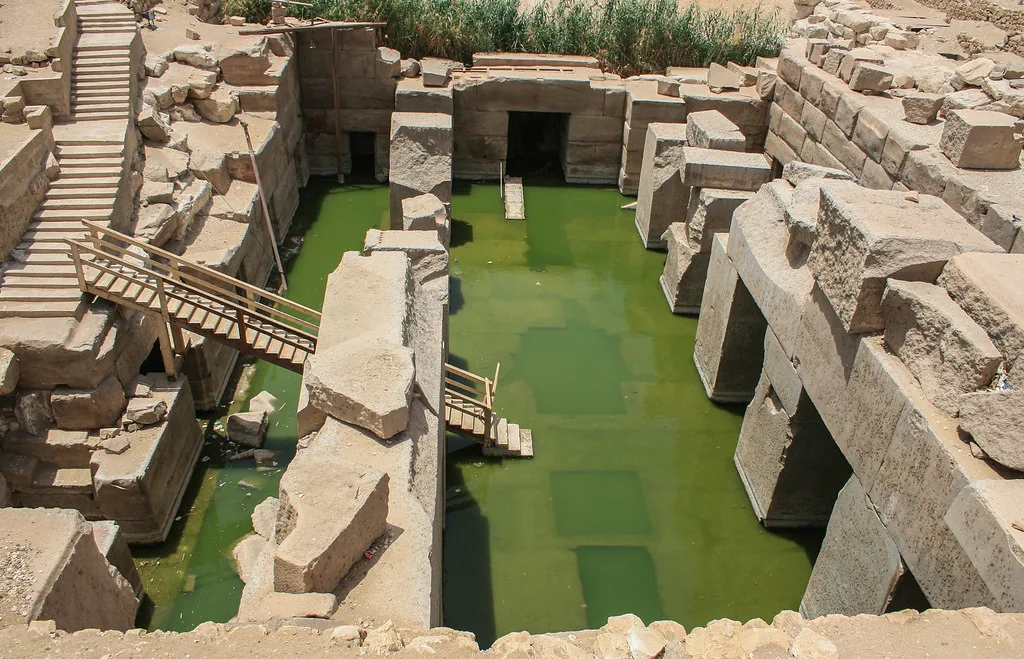
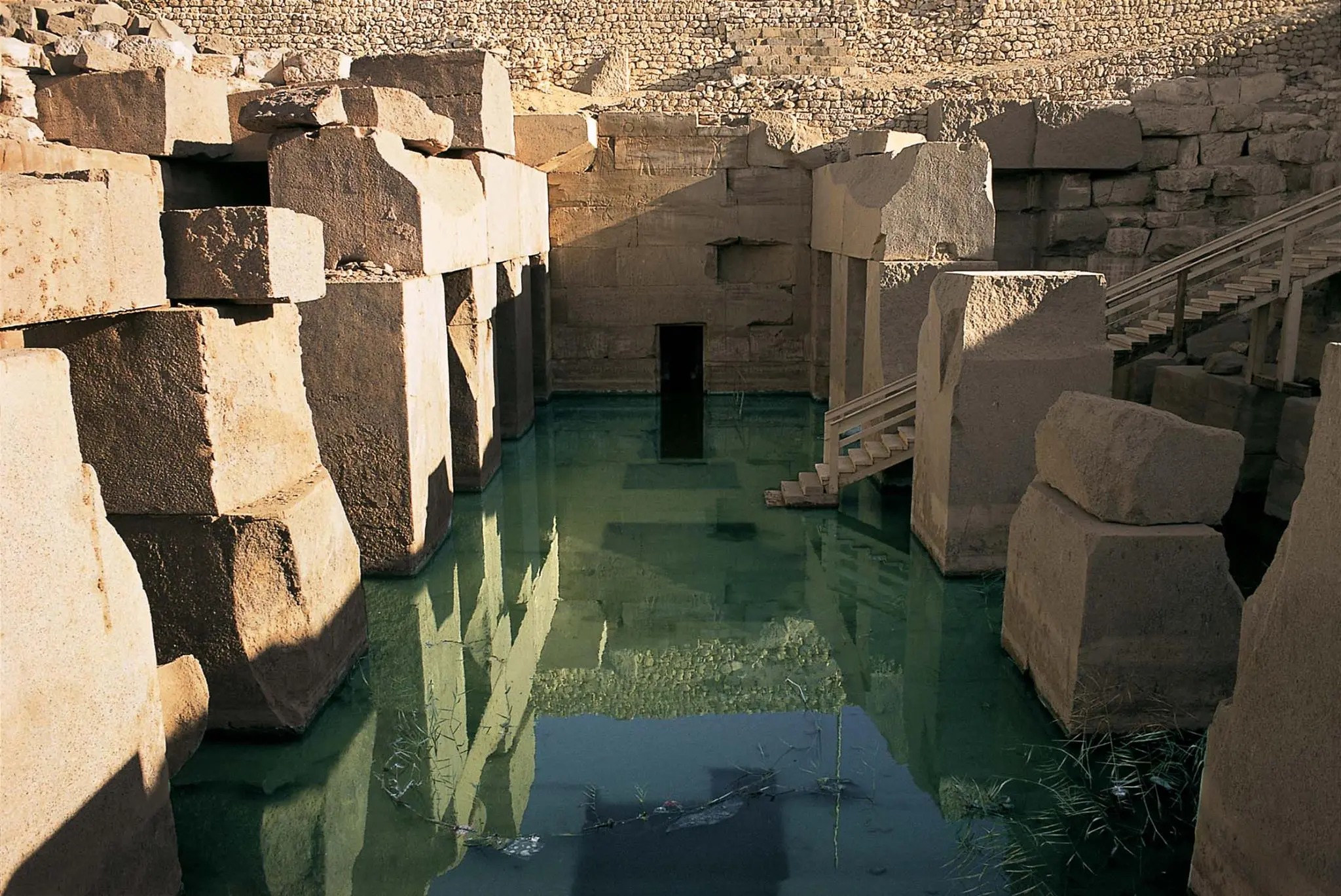
Modern visitors sometimes assume the flooding inside the Osireion is deterioration or poor drainage. It isn’t. The structure was deliberately built below the local water table so that a surrounding “lake” would form naturally, evoking Nun — the primeval waters of chaos from which the first mound of creation rose in Egyptian mythology. Walking into the Osireion was meant to feel like walking toward the beginning of the world.
The Island at Its Center
At the heart of the Osireion’s central hall is a raised platform, effectively an island surrounded by the symbolic waters — almost certainly representing the mound of creation itself, and possibly the specific spot where Osiris’s resurrection was believed to occur. Some reconstructions suggest a now-lost wooden shrine once stood here, used in ritual reenactments of Osiris’s death and rebirth performed by Abydos priests.
What’s Genuinely Still Debated
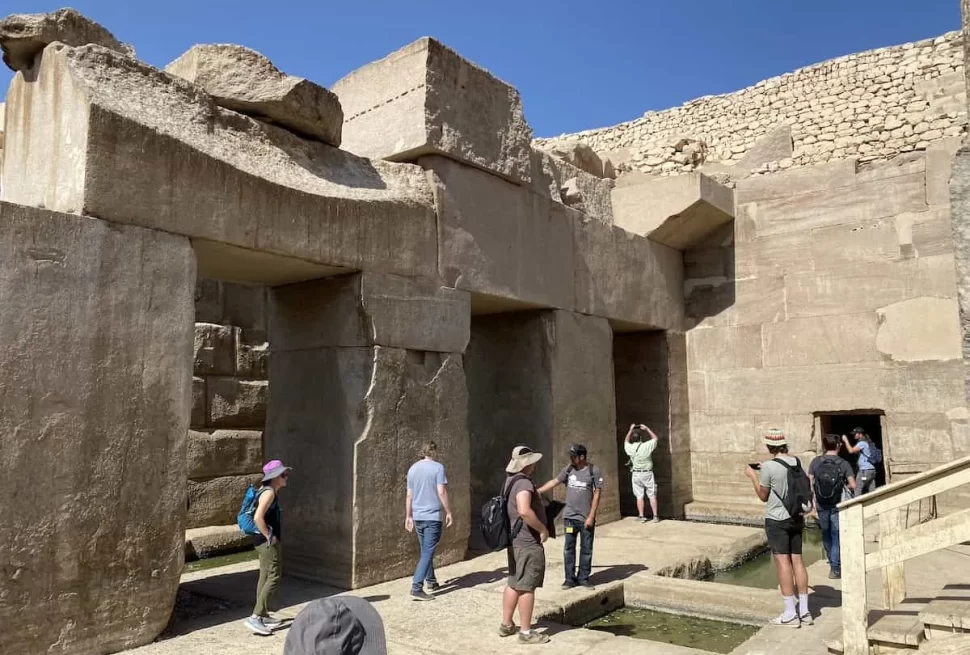
- Dating of the core structure: most Egyptologists date the Osireion to Seti I’s reign based on its inscriptions, but its massive, almost archaic-looking stonework has prompted ongoing discussion about whether it drew on much older building traditions.
- The exact rituals performed there: Abydos was the center of Egypt’s most important Osiris festival, re-enacting his death and resurrection, but how directly the Osireion itself was used in that festival is still debated.
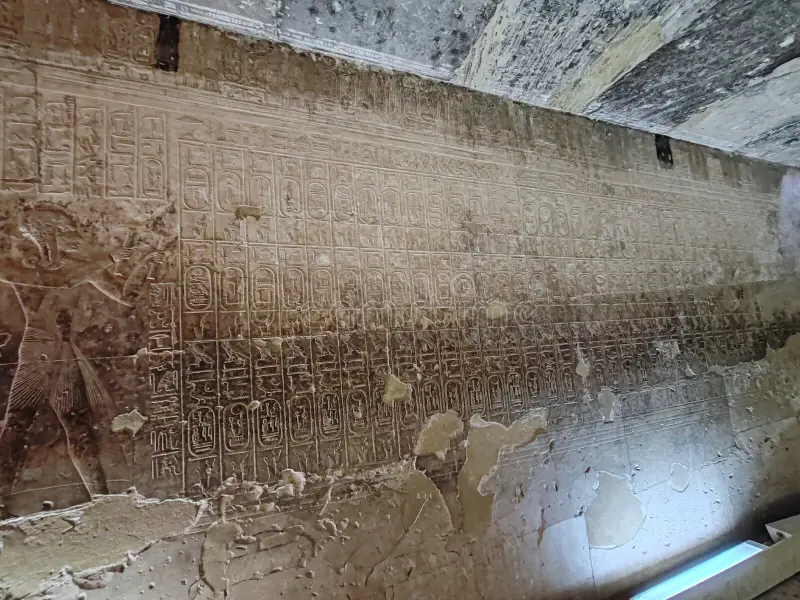
- Later additions: inscriptions from Merneptah, Seti I’s grandson, show the site was completed and modified after Seti I’s death, raising questions about how much of the final design was his original vision.
Why the Mystery Is Part of the Appeal
Unlike many of Egypt’s best-known monuments, the Osireion hasn’t been fully “solved” — and that’s exactly what draws Egyptology enthusiasts to Abydos. Standing beside its flooded central hall, with the Temple of Seti I rising just behind it, is one of the more genuinely atmospheric experiences in Egyptian archaeology.
If you would like to experience everything described in this article in real life, we offer carefully designed private and small-group Egypt tours that cover this place. Our Egyptologist-led itineraries can be tailored around exactly what interests you most.