
On the west bank of the Nile, opposite modern Luxor, a narrow desert valley hides one of the richest concentrations of ancient tombs anywhere on Earth. For nearly 500 years, from around 1539 to 1075 BCE, the Valley of the Kings was the chosen burial ground for Egypt’s New Kingdom pharaohs — and the secrets packed into its 60-plus known tombs still shape what we know about ancient Egypt today.
Why Pharaohs Chose a Hidden Valley
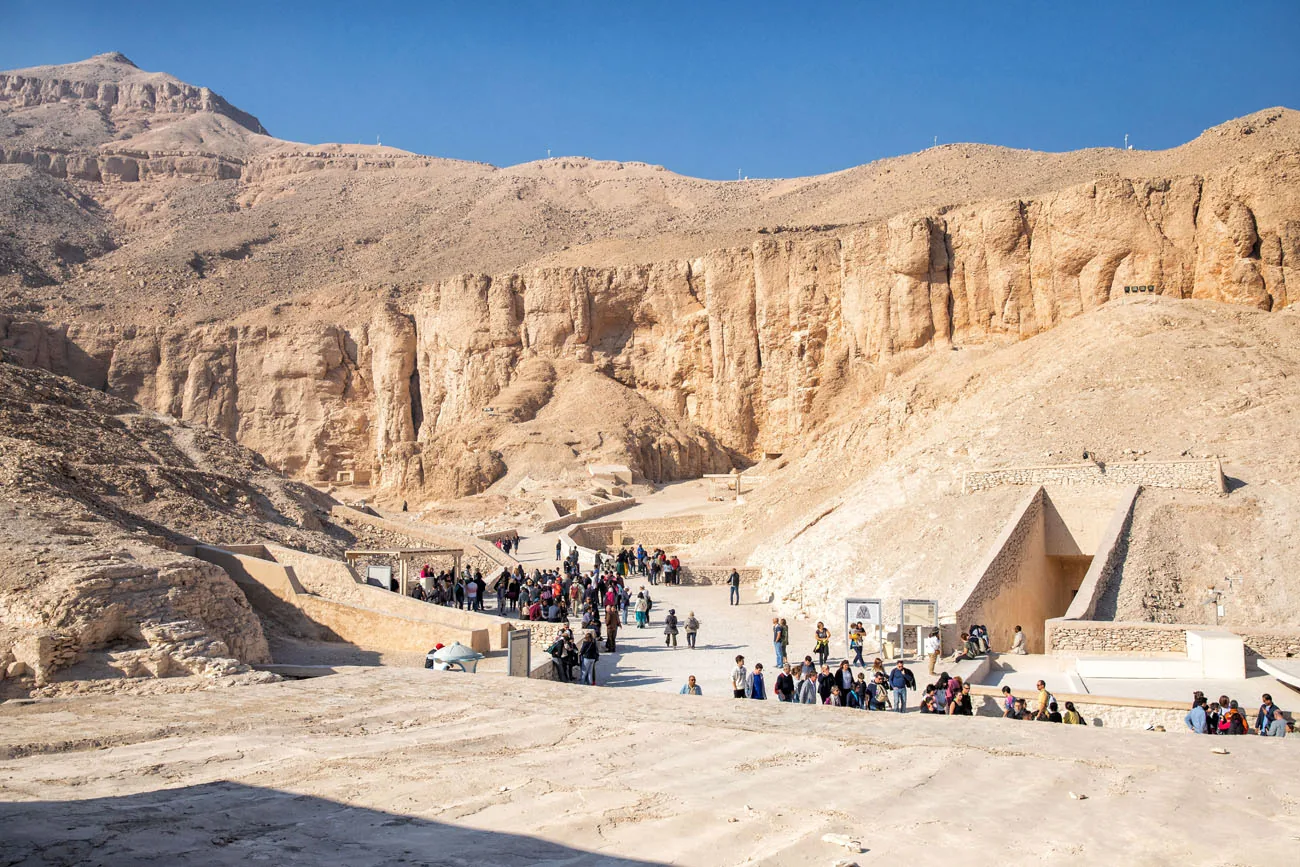
By the start of the New Kingdom, Egypt’s rulers had a problem: the pyramids of the Old and Middle Kingdoms were unmissable advertisements for the treasure buried inside them, and tomb robbery had become endemic. The solution was to bury kings in secret, rock-cut tombs tunneled deep into a remote valley overlooked by a natural pyramid-shaped peak, al-Qurn. The location was easier to guard, and the tomb entrances could be concealed once the burial was complete.
It mostly worked — for a while. Almost every tomb in the valley was eventually robbed in antiquity anyway, often within a generation or two of the burial. The one spectacular exception, discovered in 1922, is what keeps the valley famous today.
What’s Actually Inside the Tombs
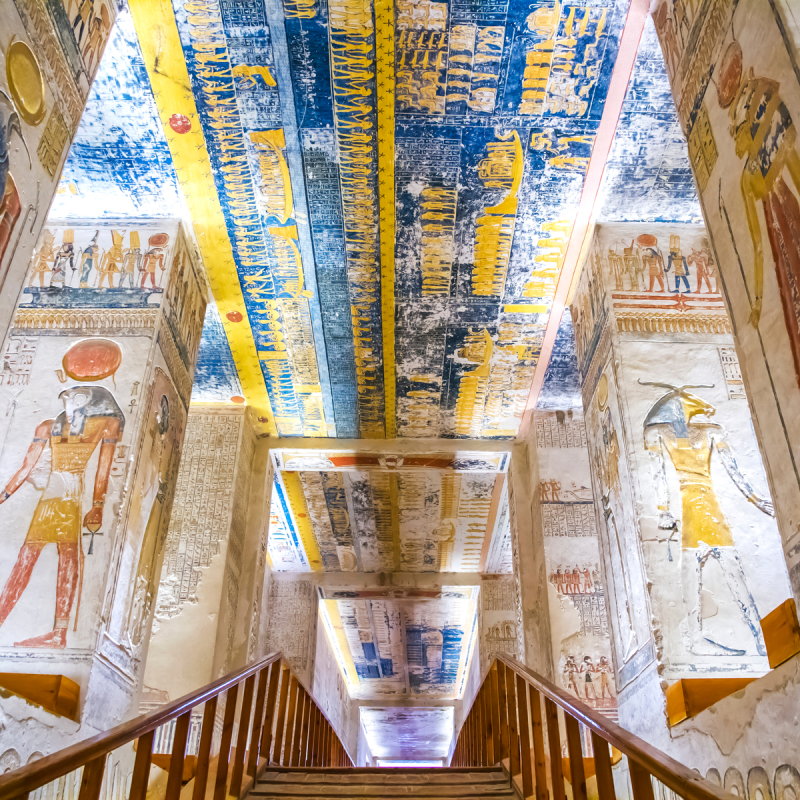
Each tomb follows a broadly similar plan: a descending corridor, one or more pillared halls, side chambers for grave goods, and a burial chamber at the deepest point, meant to represent the journey of the sun god through the underworld each night. The walls are covered not with scenes of daily life, as in earlier tombs, but with religious texts — the Book of the Dead, the Book of Gates, the Book of Caverns — guiding the king through the dangers of the afterlife toward rebirth.
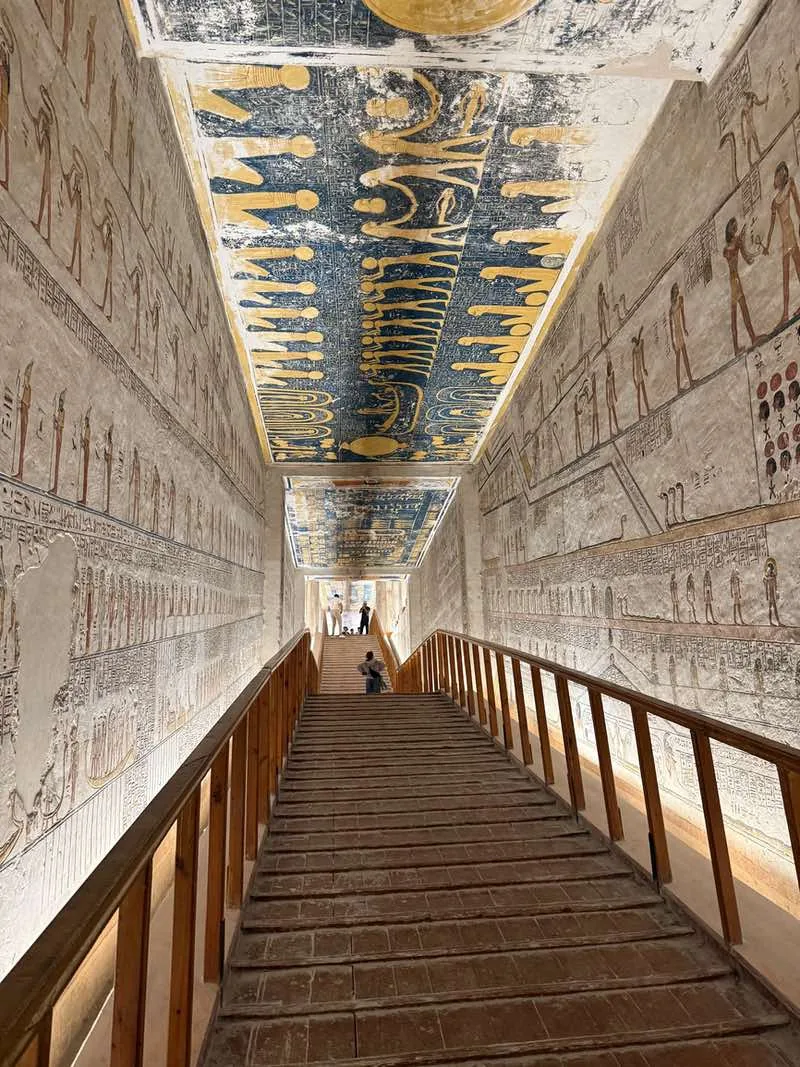
The level of detail is extraordinary: stars painted across ceilings, the sky goddess Nut stretched across a chamber roof, and rows of hieroglyphs so precisely carved and painted that many retain vivid color after more than 3,000 years underground.
Famous Tombs to Look For
- KV62 — Tutankhamun: small and modest by royal standards, but the only tomb found with its treasure largely intact.
- KV17 — Seti I: the longest, deepest, and arguably most beautifully decorated tomb in the valley.
- KV5: an enormous, still-only-partly-excavated tomb built for the many sons of Ramses II.
- KV9 — Ramses V and VI: famous for its stunning astronomical ceiling.
Engineering in the Dark
Workers lived in a purpose-built village, Deir el-Medina, and cut each tomb using copper and later bronze chisels, wooden mallets, and oil lamps whose soot was filtered with salt to burn cleaner in the confined tunnels. Teams worked in shifts around the clock once a pharaoh took the throne, because no one knew how long they had before the tomb would be needed. Surviving ostraca (notes on broken pottery) even record strikes by the workers over late wages — one of the earliest documented labor disputes in history.
The Hunt for What Was Missed
For most of the 20th century, archaeologists assumed the valley had given up all its secrets. Then, in 1922, Howard Carter found the intact tomb of Tutankhamun, and in 1995 Kent Weeks rediscovered KV5, far larger than anyone expected. Ground-penetrating radar surveys in recent years have reopened the debate over whether hidden chambers remain near Tutankhamun’s tomb — a reminder that, even after a century of intensive excavation, the valley may not be finished surprising us.
Visiting the Valley of the Kings Today
A standard ticket includes entry to three tombs (chosen from a rotating set kept open to protect the paintings from humidity damage); Tutankhamun’s tomb and a few other star tombs require separate, additional tickets. Mornings are notably cooler and less crowded, and photography rules vary by tomb, so it’s worth checking current signage on arrival. Most visitors pair the valley with other sites on the West Bank in a single day, including the Temple of Hatshepsut and the Colossi of Memnon.
Why It Still Matters
The Valley of the Kings isn’t just a collection of graves — it’s the most complete surviving record of how New Kingdom Egypt imagined death, kingship, and the afterlife. Every tomb is a slightly different variation on the same ancient promise: that a pharaoh, prepared correctly, could follow the sun into the underworld and be reborn forever.
If you would like to experience everything described in this article in real life, we offer carefully designed private and small-group Egypt tours that cover this place. Our Egyptologist-led itineraries can be tailored around exactly what interests you most.